Why Low Pressure Matters in Underfloor Air Conditioning

Why Low Pressure Matters in Underfloor Air Conditioning

Low-Pressure Underfloor Air Conditioning Insights

Not all underfloor air distribution systems operate in the same way.

Traditional underfloor displacement systems typically rely on maintaining positive pressure within the floor void to push conditioned air into the occupied space. For this approach to perform effectively, the raised access floor needs to be carefully sealed, with floor gaskets and close attention to service penetrations and other potential leakage points.

Every uncontrolled opening creates another path for pressurised air to escape.
How does push-pull air distribution work?

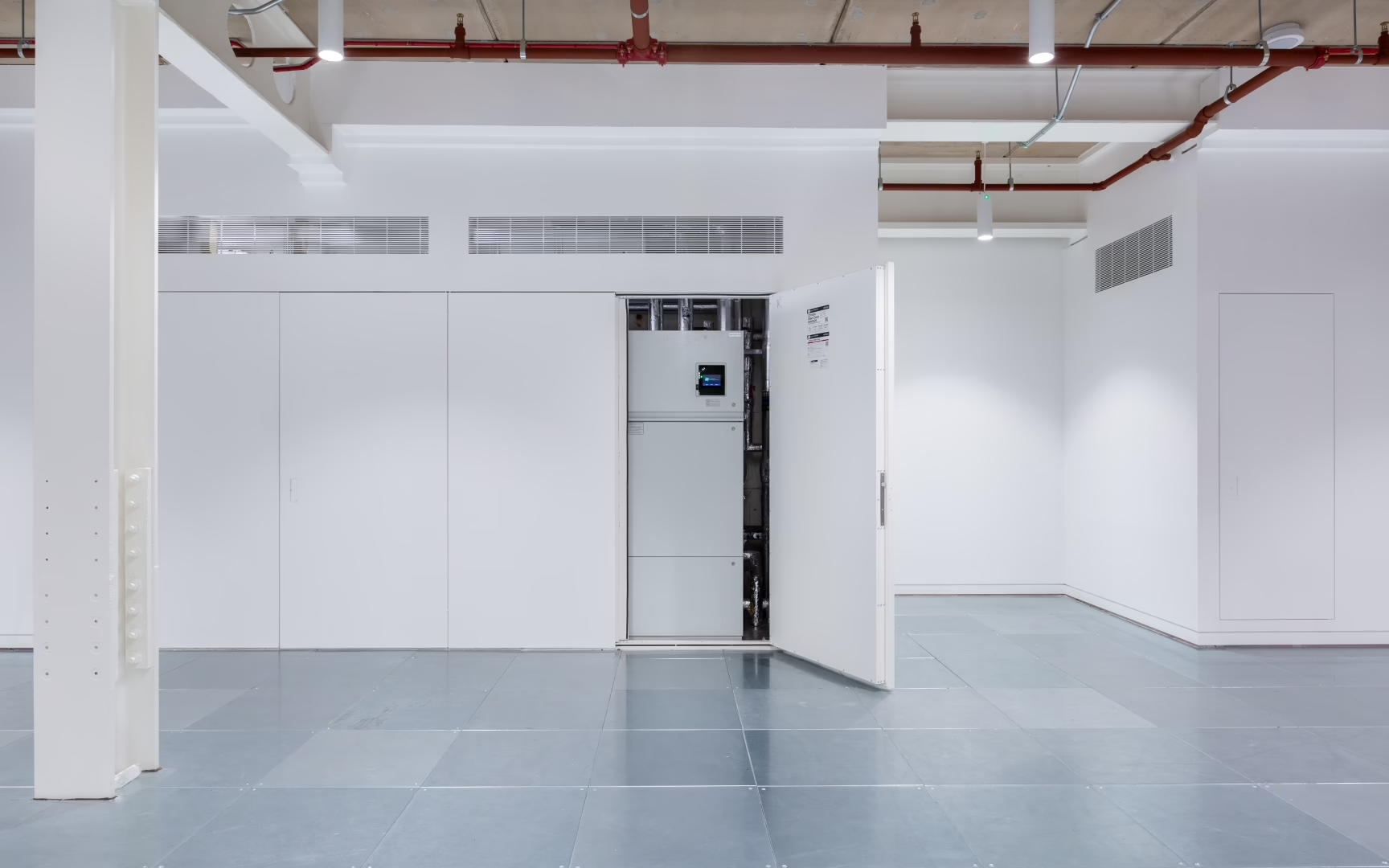
AET’s underfloor air conditioning system combines Conditioning Air Modules (CAMs) with actively controlled Fantiles™. The two work together.

The CAM delivers conditioned air into the floor void, matching the airflow demand of the occupied space.

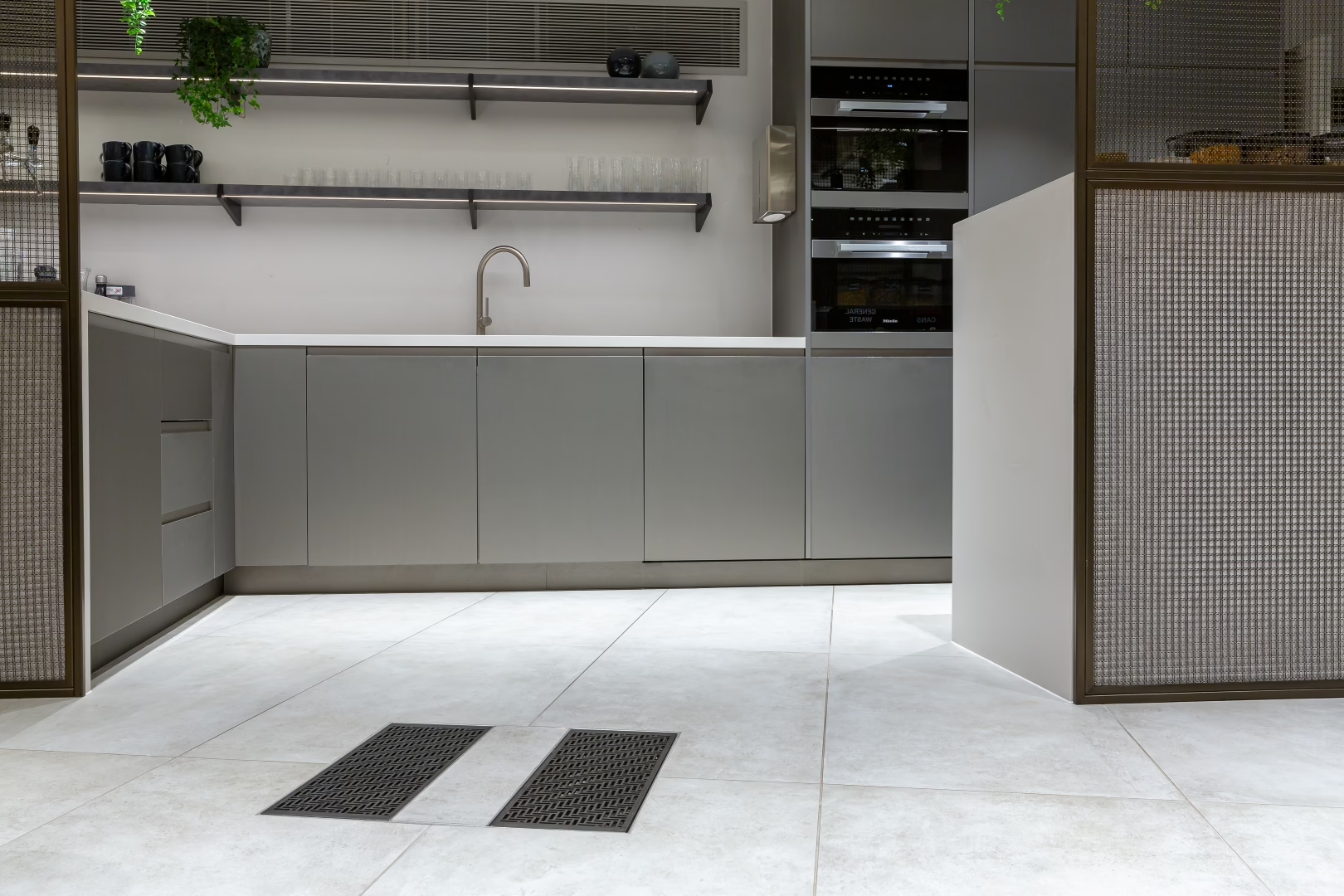
At floor level, the Fantile™ actively draws — or ‘pulls’ — conditioned air from the floor void and delivers it directly into the occupied zone at the required airflow rate.

Rather than filling the floor void with air under significant positive pressure and relying on that pressure to drive distribution, supply and demand are actively matched across the system.

The principle is simple: instead of creating pressure, create controlled airflow.

The result is an exceptionally low-pressure plenum with significantly less reliance on the airtightness of the raised access floor.

Why does a low-pressure floor plenum make a difference?

Air naturally follows the path of least resistance.

In a higher-pressure floor void, gaps between floor panels, service penetrations and other openings can become unwanted air paths. This is why conventional pressurised UfAC systems can require extensive sealing and gasketing to maintain their intended performance.

With AET’s push-pull arrangement, pressure within the floor void remains very low. As a result, potential leakage paths have a much smaller impact on overall system operation.

It brings engineering & installation benefits

→ reduced air leakage through the raised access floor
→ less dependence on airtight floor construction
→ lower system pressure and associated fan energy
→ greater tolerance of existing building conditions
→ reduced installation requirements and costs
→ greater flexibility for future workplace changes.

Floor gasketing can still improve performance and may be beneficial depending on the project. The important distinction is that, within an AET system, gasketing can become an optimisation rather than a fundamental requirement for the air distribution principle to work.

Why is this important for commercial refurbishment?

The difference becomes particularly valuable when working with existing buildings.

Many commercial properties already contain perfectly serviceable raised access flooring. Replacing it solely to accommodate a new HVAC strategy can introduce additional materials, labour, cost, programme time and embodied carbon into a refurbishment.

Traditional pressurised underfloor systems may require new floor panels and pedestals, extensive gasketing and careful sealing around penetrations to establish the required airtight plenum.

Retaining rather than replacing

AET’s low-pressure approach can typically operate with existing or recycled raised access flooring, subject to project-specific assessment and system design.

Retaining rather than replacing existing flooring can help reduce:

→ embodied carbon
→ construction waste
→ installation costs
→ programme duration
→ unnecessary use of new materials.

For refurbishment and retrofit projects in particular, this means the HVAC strategy can work with more of what is already there rather than requiring the building to be extensively adapted around the system.

Rethinking underfloor air distribution

The performance of underfloor air conditioning isn’t simply about how much pressure can be created beneath the floor.

A low-pressure push-pull approach changes the relationship between the air conditioning system and the floor itself.

By combining actively controlled Fantiles™ with matched CAM airflow, AET can deliver conditioned air where it is required while reducing many of the sealing and installation constraints traditionally associated with pressurised UfAC systems.

The result is an approach particularly suited to flexible workplaces, commercial refurbishment and projects where retaining existing building elements is a priority.

Less reliance on pressure. More intelligent control of airflow.